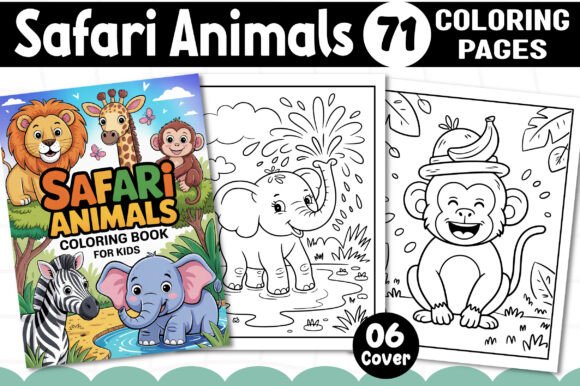
Safari Animal Coloring Pages for Kids
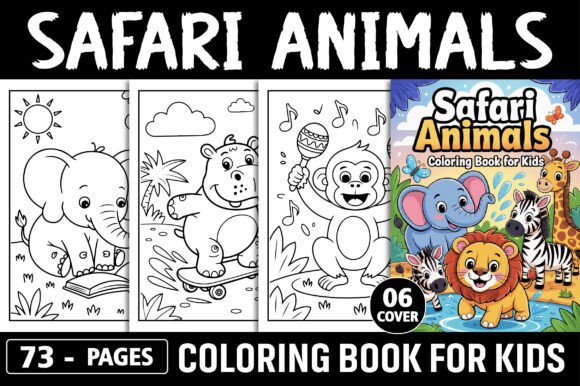
When I first pulled up the Safari Animal Coloring Pages for Kids graphic to evaluate it for a potential embroidery project, my initial reaction was one of cautious curiosity. As a designer who spends most of my day translating vector art into thread, I know that what looks clean on a screen often faces a harsh reality once it hits the hoop. This isn't just another generic clipart set; it carries the distinct visual personality of a coloring book page, which immediately signals a specific kind of stitching challenge and opportunity.
The mood these graphics create is playful, inviting, and undeniably child-friendly. The outlines are bold enough to suggest structure but retain that hand-drawn charm that makes them feel approachable rather than rigid. For an embroidery designer looking to create a handmade product with genuine appeal, this theme fits perfectly into the realm of nursery decor, baby gifts, and boutique children's apparel. However, before I commit to running this through my machine, I need to look past the cute factor and analyze how the design will actually perform in real-world applications.
From Screen to Stitch: The Real-World Test
Let's imagine a practical scenario. I am preparing a custom order for a small shop client who wants a line of embroidered tote bags for a local children's craft fair. They want something unique that stands out from the standard, overly detailed floral designs flooding the market. Enter the Safari Animal Coloring Pages for Kids. The idea is to use these high-resolution images as the base for a simplified embroidery file.
In this context, the value of the original graphic lies in its clarity. Because the source material is designed as a coloring page, the lines are generally continuous and free of the tiny, intricate cross-hatching that often gets lost in digitization. When I visualize this on a canvas tote bag, the bold outlines translate beautifully into a satin stitch or a clean running stitch. It creates a finished product that feels like a storybook brought to life, which is exactly the emotional hook parents look for when buying personalized gifts.
However, the transition from a digital graphics asset to a physical embroidery design requires careful planning. If I were to attempt to stitch every single line of the original coloring page without simplification, the result would be a dense, stiff mess that could pucker the fabric. The key here is adaptation. The design works best when we treat the "coloring" aspect as a guide for where to place stitches, rather than trying to replicate the exact pixel-perfect look of the PNG. We might opt for a fill stitch for the animal bodies and a satin stitch for the outlines, creating a texture contrast that mimics the depth of a colored-in drawing.
Navigating Fabric and Hoop Constraints
Not all surfaces are created equal, and understanding where Safari Animal Coloring Pages for Kids will struggle is just as important as knowing where it shines. My experience tells me that while these designs are fantastic for flat, stable fabrics like cotton twill or felt, they can be tricky on stretchy materials like jersey knit t-shirts or thin, sheer fabrics. Without proper stabilizer support, the tension required to hold the shape of a safari animal could cause the fabric to gather unevenly, ruining the crispness of the outline.
I also have to consider the scale. These graphics are versatile, but if I try to shrink them down too much for a cap brim or a small pocket, the details might disappear entirely. A tiny elephant eye or a zebra stripe that looks perfect on a 4x4 inch mockup could become a blurry blob on a 2-inch patch. Conversely, on larger items like pillow covers or kitchen towels, the design has room to breathe. The open spaces between the animals allow for creative negative space, letting the fabric show through as part of the "coloring" effect.
There is also the issue of color contrast. Since these are coloring pages, they rely heavily on black outlines. On dark fabric, those outlines might get lost unless we switch to a metallic thread or a high-contrast neon option. On light fabrics, the design sings. But for a commercial embroidery project, we must ensure that the final look maintains professional standards. If the thread colors clash with the background or if the stitch density is too high, the perceived value of the item drops instantly.
Building Trust and Brand Consistency
For Etsy sellers and small business owners, the aesthetic consistency of your products is paramount. Using a cohesive set of design assets like these helps establish a recognizable brand identity. Imagine a shop that specializes in safari-themed nursery items; having a library of matching Safari Animal Coloring Pages for Kids allows you to offer coordinated sets—perhaps a mobile, a wall hanging, and a onesie—all featuring the same artistic style. This level of curation builds customer trust and encourages repeat purchases.
The "coloring book" vibe also adds a layer of interactivity to the finished product. Parents love items that feel personal and unique. An embroidered piece that looks like it was colored by hand has a warmth that machine-stamped logos simply cannot match. It elevates a simple tote bag design into a keepsake. However, this relies on the quality of the execution. If the stitching is sloppy or the registration is off, the charm turns into a disappointment. That is why testing on scrap fabric is non-negotiable.
Practical Notes for the Embroidery Designer
Before you download and start stitching, there are several technical checkpoints you must address to ensure success with this type of embroidery file.
- Test the Design: Always run a test stitch on a scrap piece of the actual fabric you intend to use. Check for puckering, especially around the curved edges of the animals.
- Review Stitch Density: Coloring pages often imply large areas of white space. Decide early if you want to fill these areas with satin stitches, fill stitches, or leave them as negative space. High density on large areas can lead to bird nesting and thread breakage.
- Check Thread Colors: Ensure you have threads that provide good contrast against your chosen fabric. The original graphic is likely black and white, so you will need to select your own palette.
- Confirm Hoop Size: Verify that your machine can accommodate the full size of the design. If the design is larger than your hoop, you may need to split it or re-digitize it, which adds time and cost.
- Licensing and Usage: Crucially, review the license terms provided with the Safari Animal Coloring Pages for Kids download. Does it allow for commercial use? Can you sell finished products made from these graphics? Some licenses restrict selling items that incorporate the design directly, while others allow it. Never assume; always read the fine print.
- Stabilizer Selection: Depending on the fabric weight, you may need cut-away stabilizer for durability, especially for items that will be washed frequently, like baby clothes or aprons.
If you are a hobbyist or a professional looking to expand your craft business, these graphics offer a fresh starting point. They are not ready-to-stitch files in their raw form, but rather a rich source of inspiration that requires your expertise to transform. By treating them as a foundation for a custom machine embroidery design, you can create unique personalized gifts and small shop products that stand out in a crowded marketplace.
Ultimately, the success of using Safari Animal Coloring Pages for Kids in embroidery comes down to your ability to interpret the two-dimensional image into a three-dimensional texture. When done right, the result is a charming, high-quality item that captures the whimsical spirit of the original art while standing up to the rigors of daily use. Whether you are making a holiday gift, a boutique branding item, or a custom sweatshirt embroidery piece, taking the time to plan your stitch strategy will pay off in the final presentation.